
What Is a Domain Name?
Your domain name is your website’s address, like your-business.com, mycompany.net, or example.org.
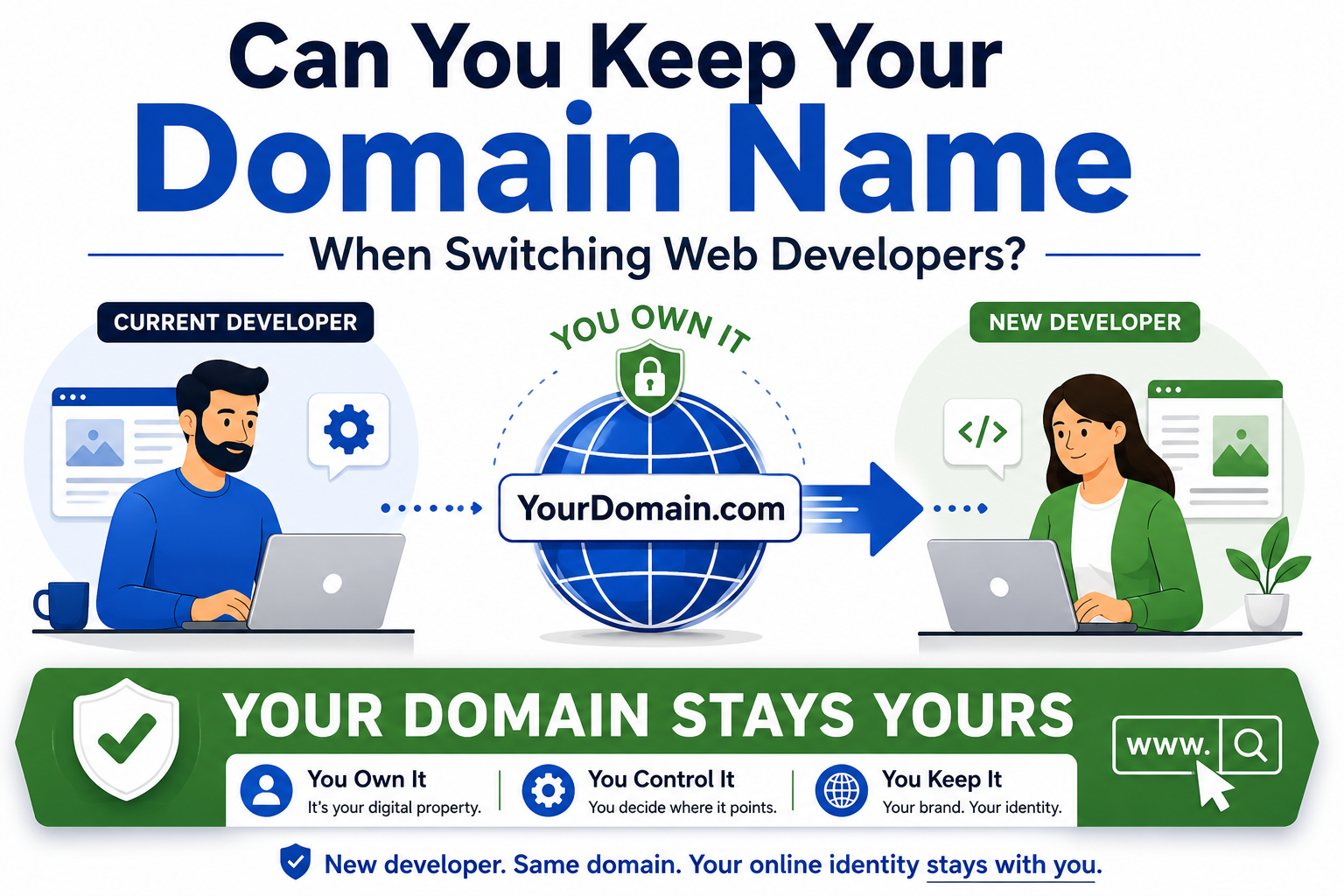
Think of it like the deed to a piece of digital property. Your website lives on that property, but the website and the domain are two different things.
Many people assume they’re the same because they often purchase them at the same time.
Who Should Own the Domain?
Ideally, you should.
Whether you’re hiring a freelancer, agency, or IT company, the domain registration should be under your own account.
That way:
- You control renewals.
- You control where it points.
- You can change web developers whenever you want.
- Your business isn’t dependent on one person.
A good web developer doesn’t need to own your domain to manage your website.
Can My New Developer Use My Existing Domain?
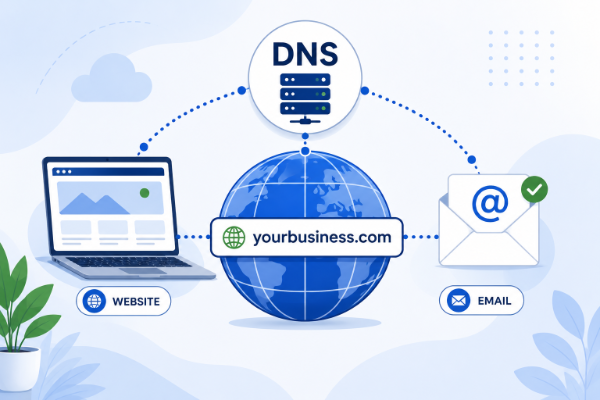
Absolutely. Moving to a new web developer usually involves changing a few DNS settings behind the scenes.
Visitors won’t notice anything different except, hopefully, a better website.
Your web address stays exactly the same.
What About My Email?
This is another common concern.
If your business email is you@your-business.com, changing web developers doesn’t automatically change your email. Email and websites are often hosted separately.
As long as the migration is planned correctly, your email should continue working normally. This is one reason I always recommend making a backup of your DNS records before making changes.
What If My Current Developer Registered the Domain?
This happens more often than you’d think.
Sometimes a developer purchases the domain on behalf of a client and keeps it in their own account. That isn’t necessarily a problem, but it can become one if communication breaks down later.
If you’re not sure who owns your domain, ask.
A reputable developer should have no problem explaining where it’s registered and helping transfer ownership if appropriate.
How Can I Check Who Owns My Domain?
The easiest way is simply to ask your current developer.
You can also log into your domain registrar if you know where the domain was purchased.
Common registrars include:
- Porkbun
- Namecheap
- Cloudflare
- GoDaddy
- Squarespace Domains
If you don’t know where it’s registered, don’t panic.
There are several public lookup tools (like this one) that can often identify the registrar, even if the owner’s contact information is private.
What Information Should I Keep?
Even if someone else manages your website, I recommend keeping a secure record of:
- Domain registrar
- Hosting provider
- Website administrator login
- Email provider
- Renewal dates
- Backup location
Having this information makes future transitions much smoother.
Red Flags to Watch For
While most web developers are honest professionals, be cautious if someone tells you:
- You can’t have access to your domain.
- They won’t tell you where it’s registered.
- They refuse to transfer ownership.
- You don’t need administrator access to anything.
Transparency builds trust. You should always know who controls the important parts of your online presence.
Final Thoughts
Changing web developers doesn’t mean starting over.
In most cases, you can keep your domain name, your email address, and even your search engine rankings while moving to a new website.
The key is making a plan before any changes are made.
If you’re thinking about changing web developers and aren’t sure what you own, I‘d be happy to help you review your setup before you make the switch.